
A Formal Analysis of The Execution of Emperor Maximilian
- Elizabeth Li
- Oct 3, 2025
- 5 min read
The following is written as an assignment for the course 4.641/4.644 19th century art: Painting in the Age of Steam at MIT.
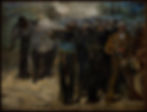
Figure 1: The Execution of Emperor Maximilian, 1867, Édouard Manet
The Execution of Emperor Maximilian by Édouard Manet in 1867 is a monumental painting depicting the artist’s interpretation of an international incident in the time of Napoleon III. Manet follows in the precedent of Spanish romantic painter Francesca Goya, who over half a century earlier had elevated the status of painting current events with The Third of May (1808, 1814) by using a large canvas traditionally reserved for history painting. Manet even draws from Goya’s composition in his own work. This particular piece, exhibited at the Museum of Fine Arts, Boston (MFA), despite being among the many experimentations by Manet with the same subject and composition, is the most psychological. Manet presents the scene to his audience, not as a printed picture in a newspaper or a scandal circulating among the gossips of society, but as an immersive experience, an opportunity to witness a riveting act of political violence. The tension, drama, and presentness of this arrangement are constructed by his experienced grasp of color, brushwork, and the unique properties of oil paint, all of which are used more intentionally than what the unresolved work may first suggest.
Measuring 195.9 centimeters tall and 259.7 centimeters wide, the size alone conveys a sense of immediate intensity. It would not be a stretch of the imagination from the above eye-level display at the MFA to see that the figures in the foreground are nearly life-size, who, if the painting were placed on the floor, would stand at the same level as the viewer. This close relation, almost like a reflection, draws the viewer into the world of the picture.
Space in the picture plane is defined only implicitly. Rather than using perspective lines or a set-design-like separation of foreground, middle ground, and background, Manet opts for a perception of space in the dimension of dreams. From bottom to top, the picture transitions from the execution grounds to the hills and sky in the distance, with no explanation of what lies in between, leaving the viewer with a sense of space without excessive detail. Furthermore, Manet limits the use of ultramarine blue, which has historically been an expensive color reserved for select details, to a wash in the background, thereby distinguishing the natural and the human. While elements of nature at the top of the canvas are painted with relatively softer colors and techniques — shades of grayish chartreuse, teal, and ultramarine mixed together through what appears to be circular movements of a painter’s wrist, the figures are starkly contrasted in black and outlined in a harsher, more decisive way. The darkness of color also creates depth; the pants of the prisoners are painted in a lighter smudge of black than those of the executioners, and blue is gradually added to the space in the distance to instill the atmosphere of an early dawn.
Manet’s versatile technique creates a substantial variation in texture throughout the painting. He takes full utility of oil paint’s characteristic to create multiple layers, each varied in translucency, overlayed to create a composite texture and depth of material unique to the medium. His treatment of the landscape or environment is comparable to that of painting skin, alive with its layers of dirt, dust, and fog. On the lower left, short horizontal strokes are applied energetically in quick impulses, first with a charcoal black and muddy green, and then with a lighter beige to create the dimensionality of the earth. The paint here is dry, and when brushed over the canvas, leaves rough trails of the fabric’s texture. Further, strokes of a bluish-white are pressed and flicked in diagonally upward directions, creating the effect of dust being shuffled in the air by the moving figures.
On the top center, white dabs of paint are scribbled on the still-wet layer beneath, mingling with the olive green and ink blue, to represent the smoke from the firing rifles, which dissolves like a morning mist into the background. The brightness of this section draws attention to the prisoners, who are a key focus of the work. Their faces are veiled in black paint, which rather cleverly leaves the horror of death to the viewer’s imagination. The treatment of the rifles and the bullets is even more appropriate. Manet applies the most minimal touches of red — two dots and a smudge — to effectively convey the sparks flung out by the bullets, and straight horizontal lines extend from the executioner’s arm to create the silhouette of a rifle. By using black, the sharpness of these lines and the amalgamated form of the figure and his gun give a machine-like quality to the officers. With their backs to the viewer, this mass of black coats has a forceful presence on the canvas, with only the few carefully placed strokes of skin tone to remind the viewer of their humanity.
Manet uses lines not only to create form, but also to contrast stillness and motion. In many instances, such as the hats of the firing squad and the wavering arm of the leftmost prisoner, Manet includes sketch lines painted in a single, sweeping stroke to produce a double image or a blur. While the ovals of the hats create a sense of multitude, the indeterministic traces of prisoners’ bodies make a violent, jerking motion of falling back after being shot. Further, while the lines of a recoiling rifle are painted in fast and sharp strokes, the lines of the same weapon resting on the ground are painted in slower and thicker strokes. Touches of gold lines add further definition, particularly to indicate the anatomy of the executioners by a detail on their uniforms.
Among all the people in the painting, one figure on the right stands out. Gun lowered to the floor, he is unseen by the firing squad behind him and directly faces the viewer in confrontation. The color of his coat is a lighter, more brownish color than that of his counterparts. Brushes of white are grazed over his hat, and he is given some facial features, notably his nose. He looks at the viewer, the bystanders of this scene, almost as if to question our role and implication as part of this event, which forms another source of tension within the composition.
Finally, much like its visual source of inspiration, The Third of May, Manet’s work employs a subtle use of artificial light. A bright spotlight that disagrees with the time of day shines from above, directly illuminating the ground in front of the prisoners, manufacturing a theatricality of the moment that makes the emotional aspect of the picture more compelling.
Though unfinished by the standards of mid-nineteenth-century painting, Manet’s The Execution of Emperor Maximilian creates, whether intentionally or unintentionally, an overall lightness and sense of motion that is rare among its contemporaries. His visibly relaxed and expressive posture of painting, as well as the implied movement of his process, culminate in an energetic piece that appeals to the audience’s primal response to violence by bringing an event across continents to the present. While nodding to the forms of his predecessors, his radical technique also reflects the art of his time at the precipice of the impressionist movement. Building on the formal and material qualities of this work, questions remain about the historical context of the picture and the role or stance Manet held during the time of its creation. A study of the influences of nineteenth-century art, as well as a cross-comparison with Goya’s work, would also be highly relevant.